When myopia changes, the plan should change with it.
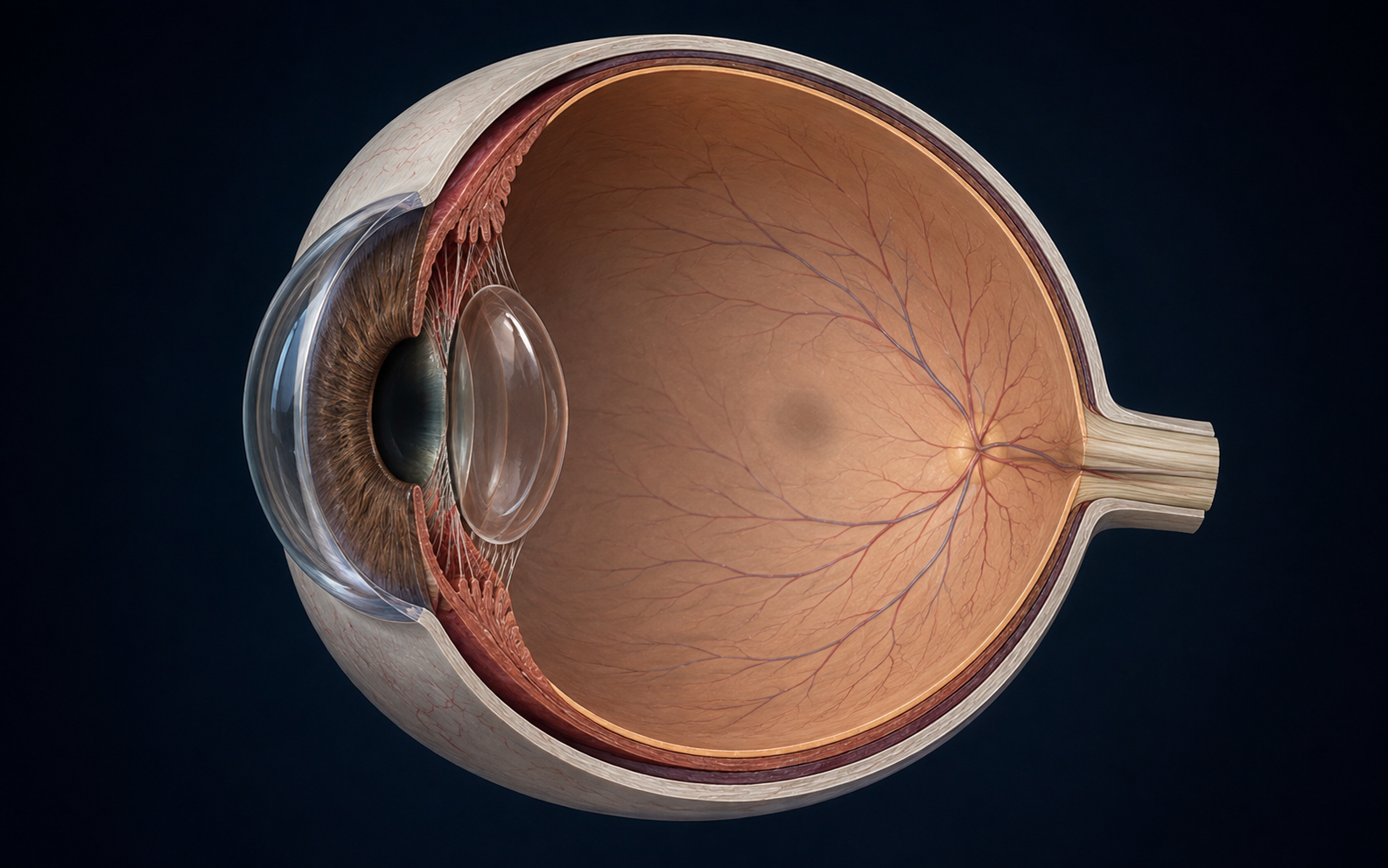
Myopia usually means the eye has grown too long for its focusing power. Standard glasses can make vision clear, but myopia-control designs are intended to address progression as well as correction.
The goal is not to promise that myopia will stop. It is to select an evidence-informed option, use it consistently and monitor how the child responds over time.
A simple way to understand myopia
Follow the light. Understand the lens.
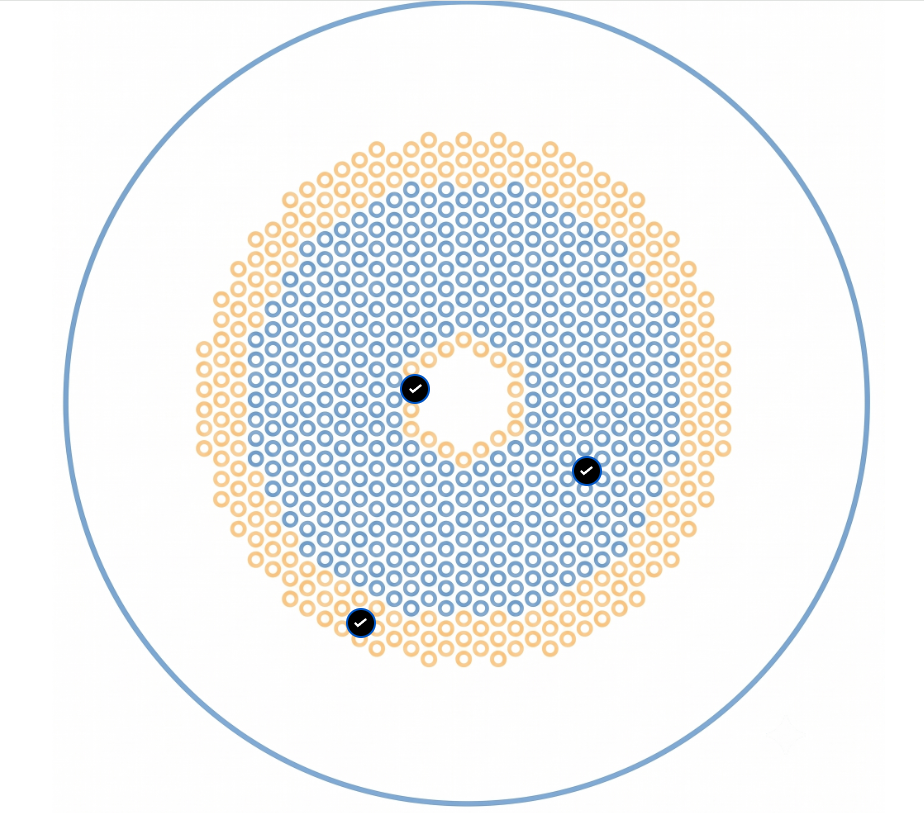
Switch between single-vision, MiYOSMART and Stellest designs to see how clear vision and myopic defocus can work together.
MiYOSMART · D.I.M.S.Lens design and light inside the eye
The eye image did not load. Please refresh the page.
Blue: clear imageGold: myopic defocus
Conceptual illustration: bundles represent different fields of view. Angles, spacing and distances are simplified; this is not precise ray tracing or a prediction of individual results.
Educational illustration, not a manufacturer optical simulation or an individual outcome prediction. This interaction shows single vision, original D.I.M.S. and H.A.L.T.; it does not simulate ZEISS C.A.R.E. or MiSight Spectacle diffusion optics. Compare all four lens families ↓
Available approaches at SEEWELL
Three parts of a complete control plan.
The appropriate pathway depends on the child’s prescription, age, eye health, lifestyle, readiness and professional assessment.
01 · SPECTACLE LENSES
Myopia-control glasses
Specialized spectacle lenses correct vision while adding a treatment structure intended to influence the visual signal associated with eye growth.
Familiar, non-contact-lens option for children
Designed for consistent wear according to the prescribed plan
Precise frame fit, centration and lens position are essential
Options include ZEISS MyoCare, Essilor Stellest, HOYA MiYOSMART and CooperVision MiSight® Spectacle Lenses
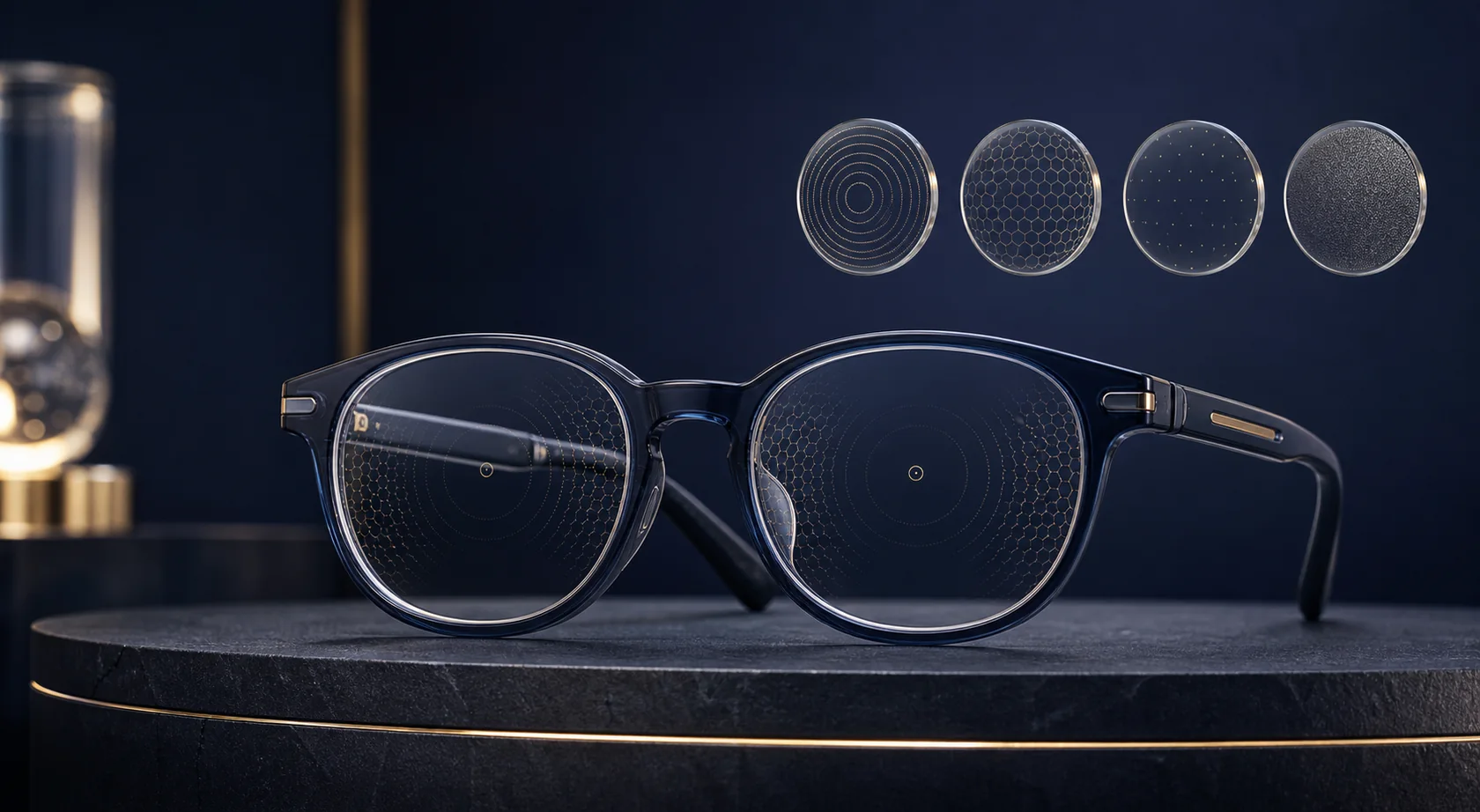
The four technologies do not work in exactly the same way. Compare their optical principles in the section below.
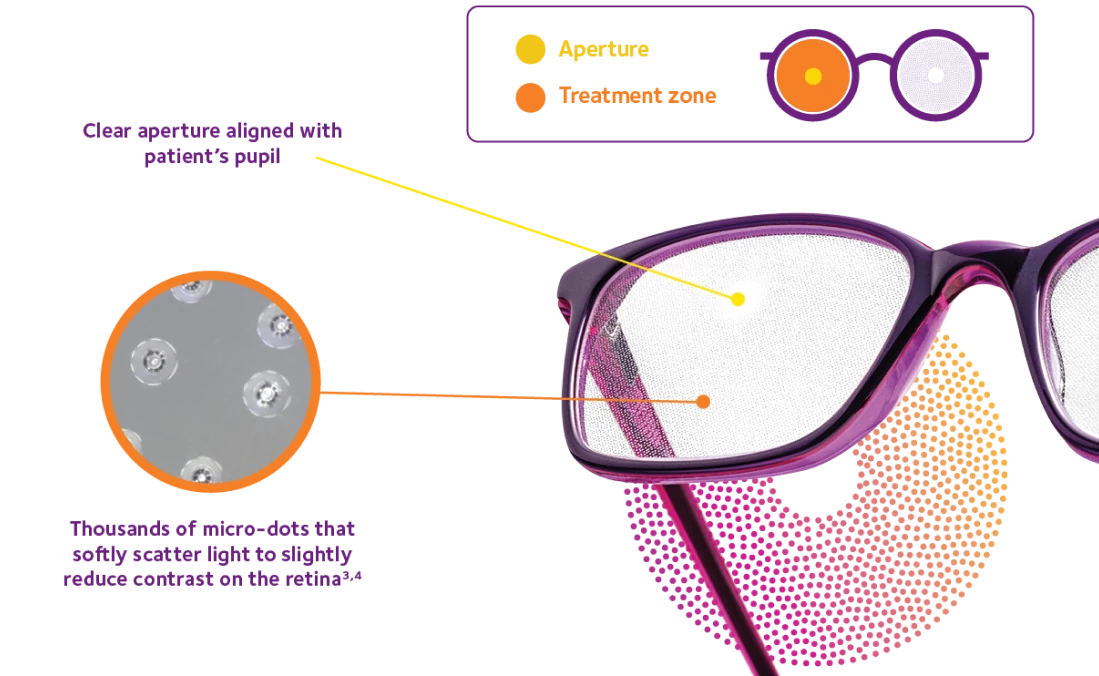
Each option makes distance vision clear and adds a special treatment area around the centre. The pattern is different from brand to brand, but the goal is similar: help slow how quickly myopia gets stronger.
Interactive generation comparison
See what changed—one upgrade at a time.
Choose a lens family, compare the official visuals, then tap the three upgrade cards. The language stays practical so parents can understand what the redesign may mean in everyday wear.
Children showed no clinically relevant prescription progression during the first 12 months.
AVERAGE EYE GROWTH0.075 mm
Compared with 0.346 mm for the standard single-vision group over 12 months.
STUDY CONTEXT196 children
Children aged 4–12 who completed the randomized controlled trial in Hong Kong.
How to read this: “no clinically relevant progression” means less than a −0.50 D prescription change over 12 months; it is not a guarantee of zero change for every child. Results vary by age and starting condition.
What this means for a parent
MiYOSMART iQ places a stronger treatment signal across a larger part of the lens, while retaining a clear central area for everyday vision. Consistent wear and regular monitoring still matter.
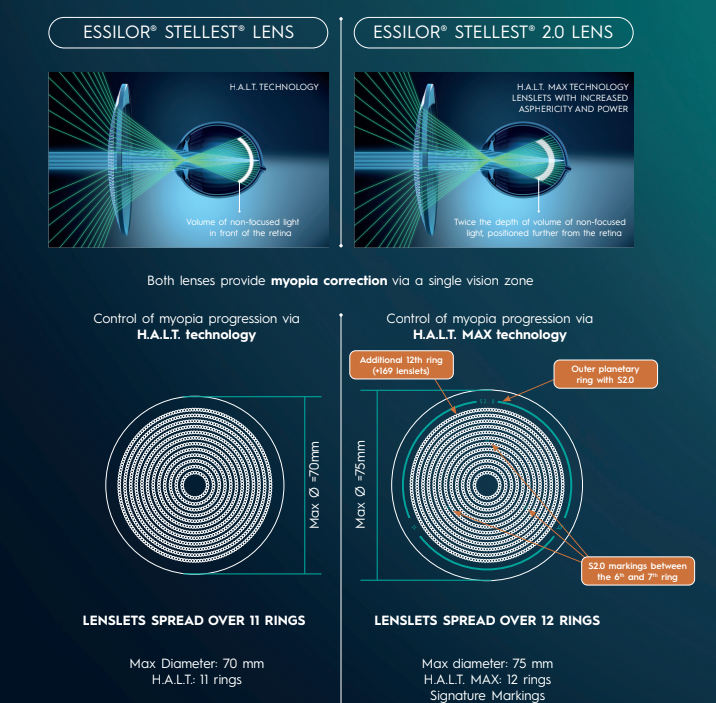
OFFICIAL ESSILOR VISUAL · H.A.L.T. AND H.A.L.T. MAX STRUCTURE
TAP EACH CARD FOR A SIMPLE EXPLANATION
AVERAGE EYE GROWTH0.228 → 0.121 mm
Original Stellest compared with Stellest 2.0 over 12 months in one clinical study.
RELATIVE DIFFERENCE46% less
Estimated axial-length growth compared with the original Stellest group in that study.
STUDY CONTEXT50 children
A 12-month randomized crossover trial conducted in Singapore.
How to read this: a smaller axial-length increase means the eye grew less during the study period. It does not mean every child’s eye stopped growing, and individual results vary.
What this means for a parent
The newer design produced less average eye growth than the original Stellest design in this study. Proper fit, consistent wear and regular follow-up are still essential.
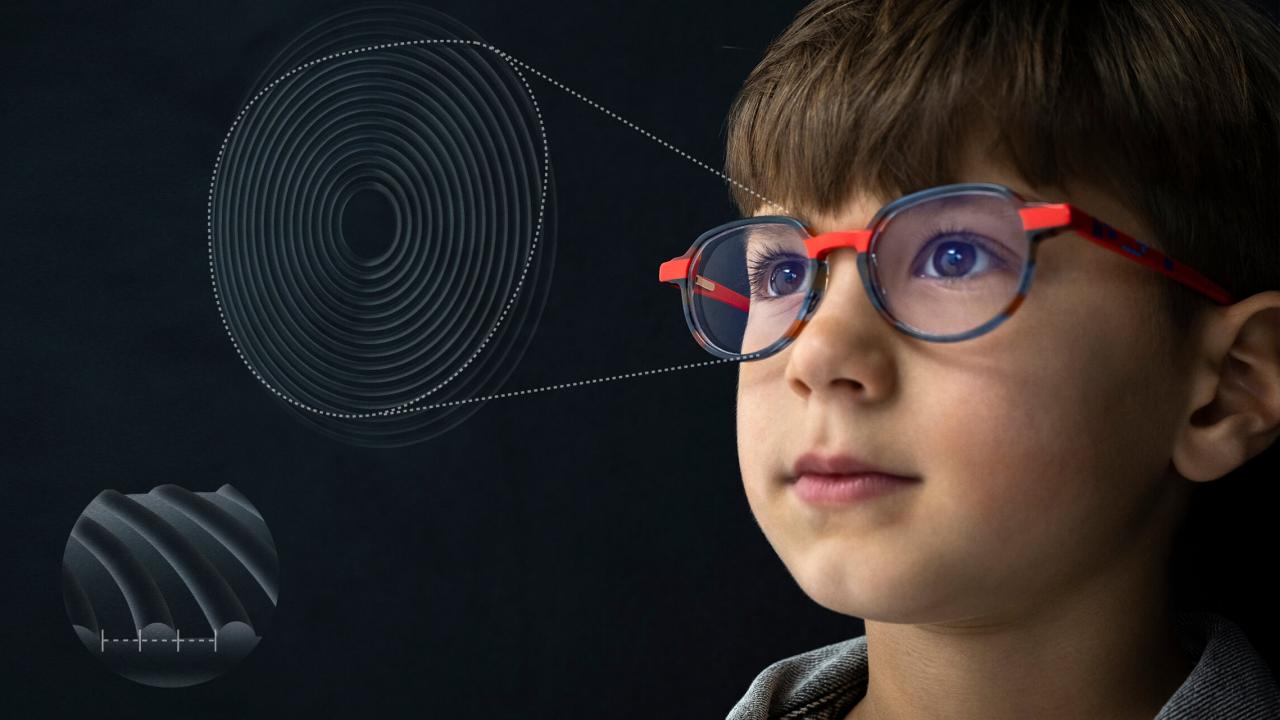
Alternating treatment and correction zones around a clear central zone.
OFFICIAL ZEISS
Core optical idea
Cylindrical Annular Refractive Elements create simultaneous competing defocus, while the optimized back surface helps maintain the intended correction and treatment effect across gaze angles.
Clear central zone for distance correction
Annular treatment elements alternate with regular correction areas
Precise centration and frame position support intended performance
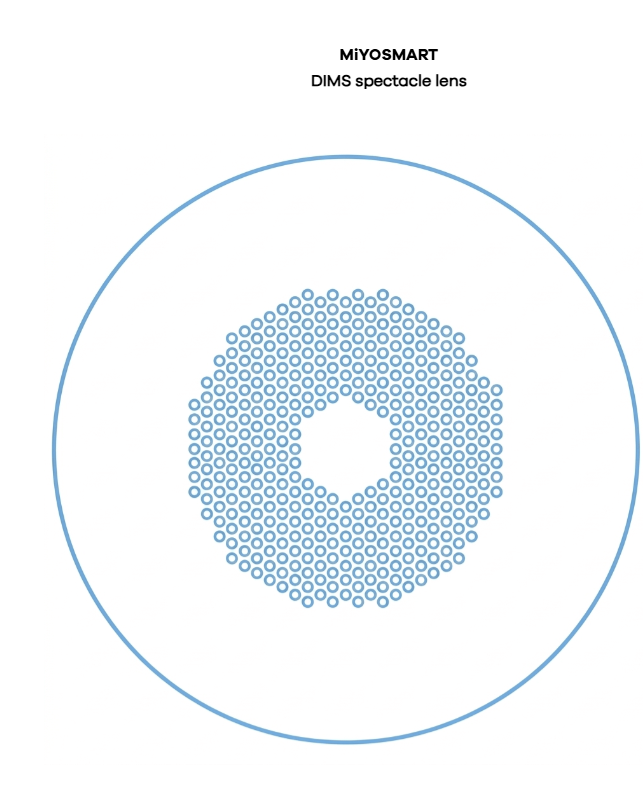
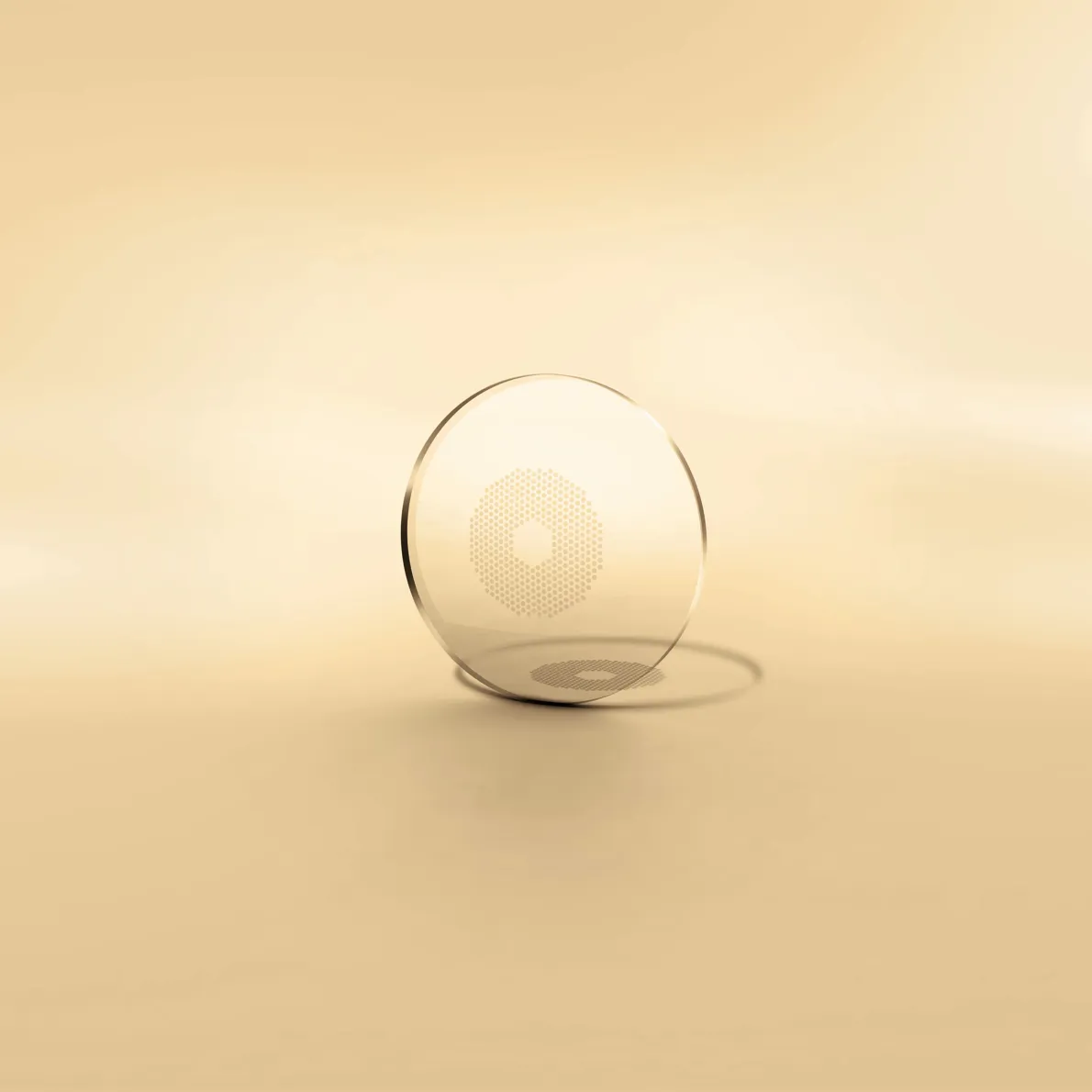
A central focus zone with a honeycomb-shaped treatment area.
OFFICIAL HOYA
Core optical idea
Defocus Incorporated Multiple Segments provide vision correction and myopic defocus at the same time, using many small segments in the surrounding treatment zone.
Clear central zone supports primary vision correction
Important: Brand technology alone does not determine the best choice. Prescription, progression pattern, age, eye health, frame fit, lifestyle, availability and the child’s ability to wear the lens consistently all influence the recommendation.
Choosing a practical pathway
Two ways to wear treatment. One commitment to follow-up.
There is no single “best” lens for every child. The right starting point must be clinically suitable, comfortable and realistic enough to wear consistently.
SPECTACLE PATHWAY
Familiar and non-contact.
Specialized spectacle lenses may be the more familiar starting point for children and families who prefer glasses.
Daily routineWear the glasses according to the recommended schedule.
Key requirementA stable frame, accurate centration and correct lens position.
Family roleSupport consistent wear and return for fit or prescription reviews.
DAILY CONTACT PATHWAY
Frame-free and handling-led.
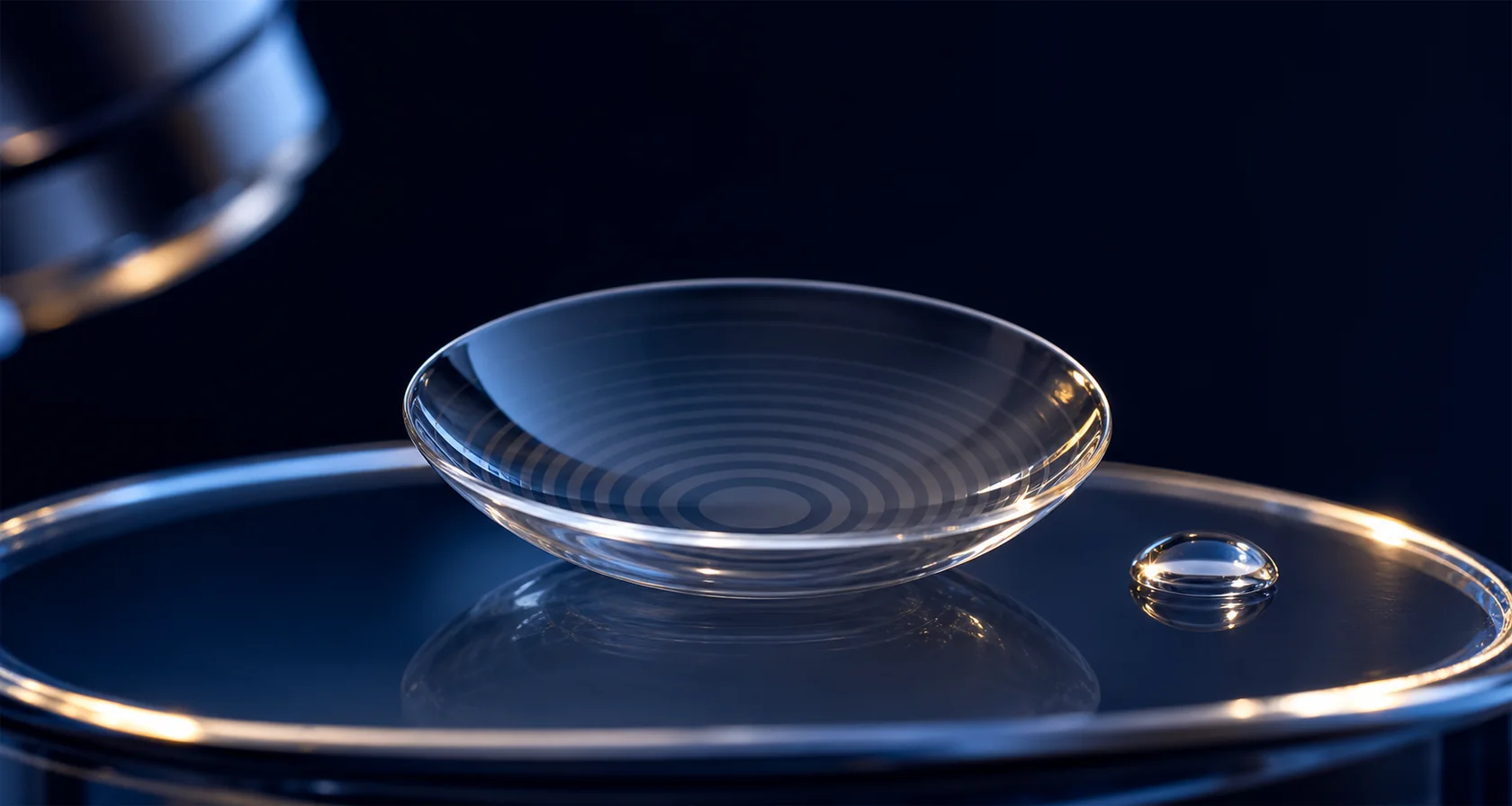
Purpose-designed daily soft lenses may suit age-appropriate children who are ready to learn safe handling.
Daily routineUse a fresh pair each day and remove the lenses before sleep.
Key requirementProfessional assessment, trial fitting and healthy wear habits.
Family roleReinforce clean handling and report comfort or vision concerns.
Both pathways include ongoing care.
The product is only one part of the program. Follow-up confirms that the plan remains useful for the child.
Vision and prescription reviewFit, comfort and wear checkPlan discussion and adjustment
How a recommendation is made
We match the plan to the child—not the product.
Before comparing brands or technology, four practical questions help narrow the safe and realistic options.
01Progression pattern
How early myopia began, how quickly the prescription has changed and relevant family history.
02Vision and eye health
Prescription, binocular vision, ocular health and any findings that affect eligibility or lens choice.
03Daily routine
School, sports, near work, outdoor time, comfort priorities and realistic wearing consistency.
04Readiness and fit
Frame measurements for spectacles, or maturity, handling skills and ocular-surface suitability for contacts.
The SEEWELL care journey
Five steps from assessment to follow-up.
Each step is designed to help parents understand not only what is recommended, but why.
01 · EYE CHECKUnderstand the change
Review vision, prescription history, eye health and relevant family or lifestyle factors.
02 · SELECTCompare suitable options
Discuss spectacle or contact-lens pathways based on clinical findings and readiness.
03 · FITTINGMeasure precisely
Position the frame and lenses carefully, or assess a contact-lens trial on the eyes.
04 · CAREBuild daily confidence
Explain wearing routines, cleaning where applicable, handling and warning signs.
05 · FOLLOW-UPMonitor and adjust
Review progression, visual performance, fit, comfort and whether the plan remains suitable.
HEALTHY VISUAL ROUTINES
Supportive daily habits
Lenses work inside a bigger routine.
Healthy visual habits support the care plan, but they do not replace prescribed myopia-control treatment.
Outdoor time
Discuss age-appropriate outdoor activity with your child’s eye-care professional and family healthcare team.
Comfortable near work
Use suitable lighting, working distance and regular visual breaks during reading and screen use.
Consistent wear
Follow the recommended wearing schedule and bring concerns to follow-up instead of changing the plan independently.
Important: Myopia-control outcomes vary. Treatment does not eliminate myopia or guarantee that progression will stop. Eligibility, product availability, risks, benefits and wearing instructions must be confirmed after professional assessment.
Questions from parents
Clear answers before you decide.
Are myopia-control lenses the same as regular glasses?
No. Regular single-vision glasses correct blur. Myopia-control spectacle or contact lenses use specialized optical designs intended to help manage progression while correcting vision.
Which option is best for my child?
The recommendation depends on prescription, progression history, age, eye health, lifestyle, maturity, wearing preferences and assessment findings. The most sophisticated option is not useful if it is not suitable or cannot be worn consistently.
Can a child safely wear contact lenses?
Many age-appropriate children can learn safe handling, but readiness must be assessed individually. Daily disposables simplify care, while insertion, removal, hygiene and follow-up remain essential.
How often will follow-up be needed?
The schedule is individualized by the eye-care professional. Visits review visual performance, prescription changes, lens fit, comfort, handling and whether the current plan remains appropriate.
Will treatment stop myopia completely?
No treatment should be presented as a guarantee. The aim is to reduce the rate of progression compared with ordinary correction, while maintaining useful vision and monitoring the child’s response.
For your family
Start with a myopia-control conversation.
Bring the child’s current glasses and any previous prescriptions or examination records available. We will help you understand the next appropriate step.